A BOOK OF Secrets
In 1648, a collection of mystical writings known as The Valley of the King was published in Amsterdam. Compiled by traveler Naftali Hertz Bacharach, this collection of spiritual stories and poetry offers a direct window into the supernatural—with a mysterious legend about the hiding of the treasures of King Solomon’s Temple.
AN ANCIENT CODE
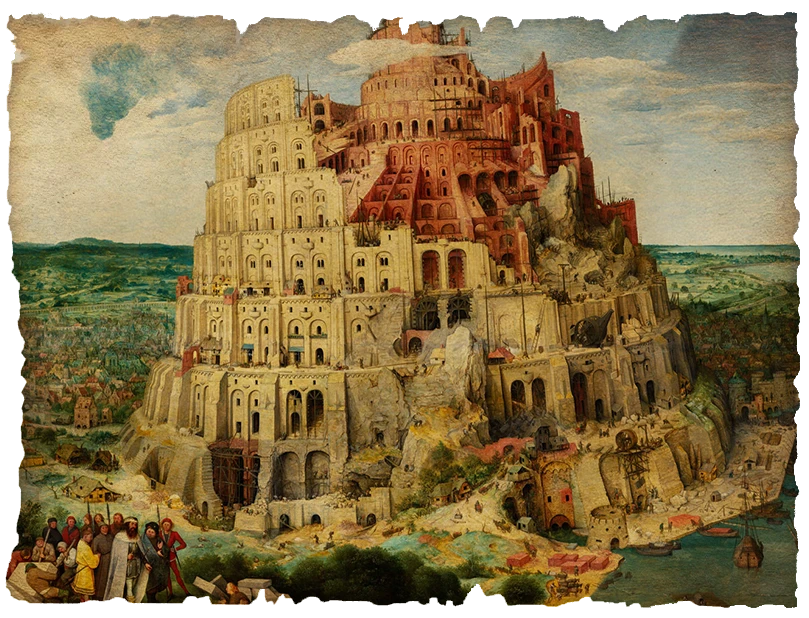
According to this legend, the Lost Ark of the Covenant and King Solomon’s treasures were buried at six locations in the ancient Near East. But of these six hiding places, all but two are mythical places from ancient scripture. Could this story have a hidden meaning?
buried treasure
This legend says the Temple treasures will only be revealed when humanity chooses peace over destruction. In an era fraught with uncertainty, this ancient tale feels less like myth and more like prophecy. Could the key to our future lie hidden in the secrets of our past?
FOR A NEW DAWN
Do the ancient treasures of The Valley of the King have meaning today? Whether it’s religious mysticism or the cinematic tale of the Lost Ark, the enduring legend of a powerful force bringing either peace or ruin remains deeply relevant to our troubled world.

A Dashing Explorer
Over a century ago, the gallant Captain Montagu Parker staked his reputation on a desperate gamble: finding a legendary, mystical treasure to win the heart of an American socialite. A decorated war hero, the English nobleman dreamed of sealing his love with a prize even greater than gold or silver—the Lost Ark itself.
A Scandalous Beauty
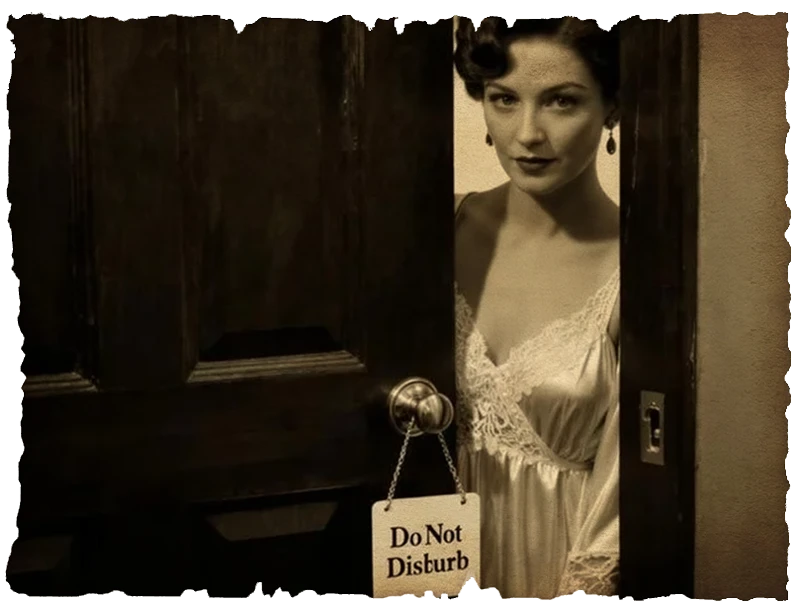
Admired as the era’s unparalleled beauty, Ava Astor made a tantalizing pledge to Captain Parker: He could win her heart, but only by fulfilling the greatest quest in history. Smitten, the captain ignored the scandalous rumors of Astor’s past affairs, desperate to prove his worth to her.

A Mystical Poet
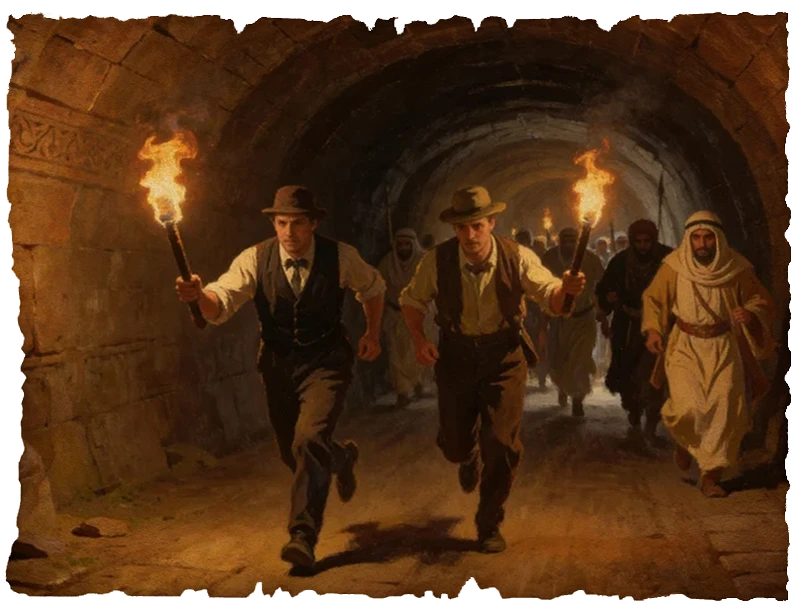
When Captain Parker arrived in Jerusalem, he wasn’t alone. At his side was Valter Juvelius, a mystical Swedish poet who seemed to claim the impossible. Juvelius insisted he had cracked a cipher hidden within the writings of an ancient prophet—a code that pointed directly to the Lost Ark.
Broken Dreams
After two years of fruitless exploration, Parker despaired of the poet’s promises. A disastrous raid on an ancient shrine—supposedly housing the Lost Ark—was a humiliation he couldn’t outrun. He returned to England in disgrace, only to find a colder reality: Astor, now a wealthy widow courtesy of the Titanic, refused to even acknowledge him.

an ancient legend
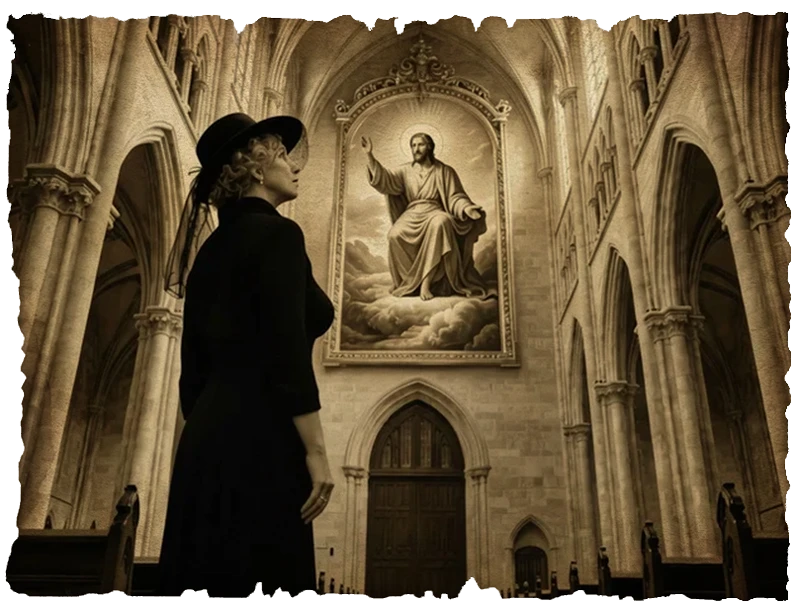
A few years later, a young Frenchwoman living near Damascus found herself in possession of an unusual inheritance: a set of mysterious stone tablets. Inscribed with a story that mirrored The Valley of the King, they told of the Lost Ark—concealed by a prophet in the forgotten ruins of Babylon or beneath the ancient streets of Jerusalem. Yet, the true puzzle wasn’t the legend, but the hidden code waiting to be deciphered.
From the Ashes
According to the legend, only a fabled copper map can reveal the Lost Ark’s true hiding place. With no way of finding such a treasure map, Madame Durand donated the tablets to the new State of Israel. She felt the tablets belonged in a museum, preferably in Jerusalem, where the story of the Lost Ark’s disappearance began.
Into the Light
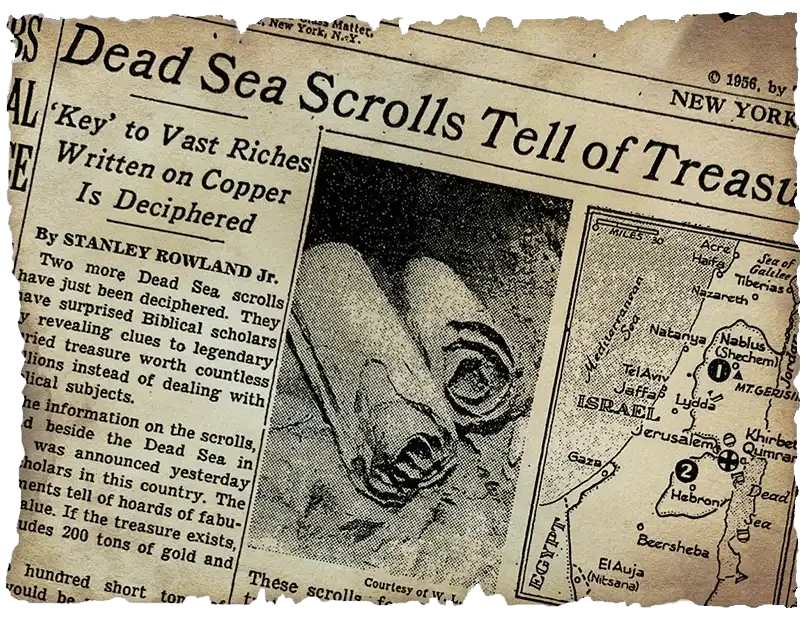
On November 29, 1947, the same day that Madame Durand gave up her tablets, an archaeologist acquired the first of the Dead Sea Scrolls. Discovered by Bedouins in a cave near the Dead Sea, these ancient manuscripts contain the oldest known biblical writings—and a treasure map made of copper.
a secret cave
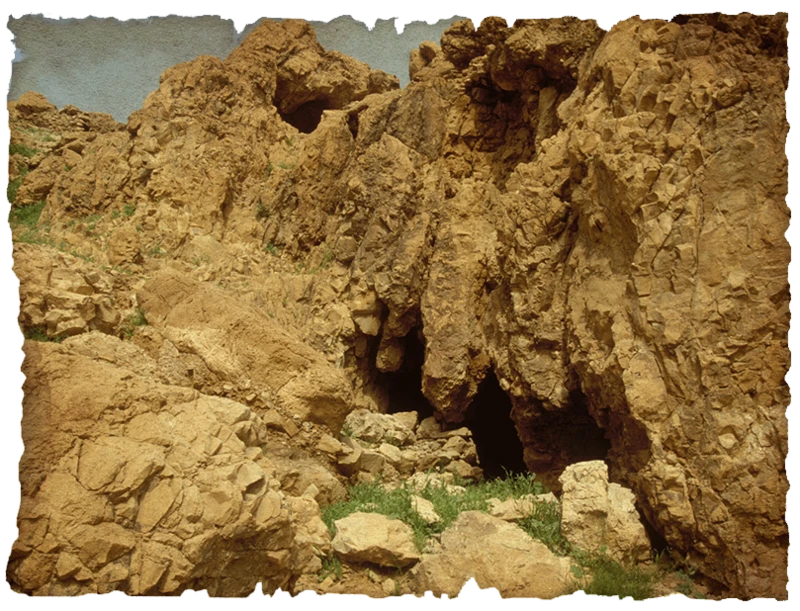
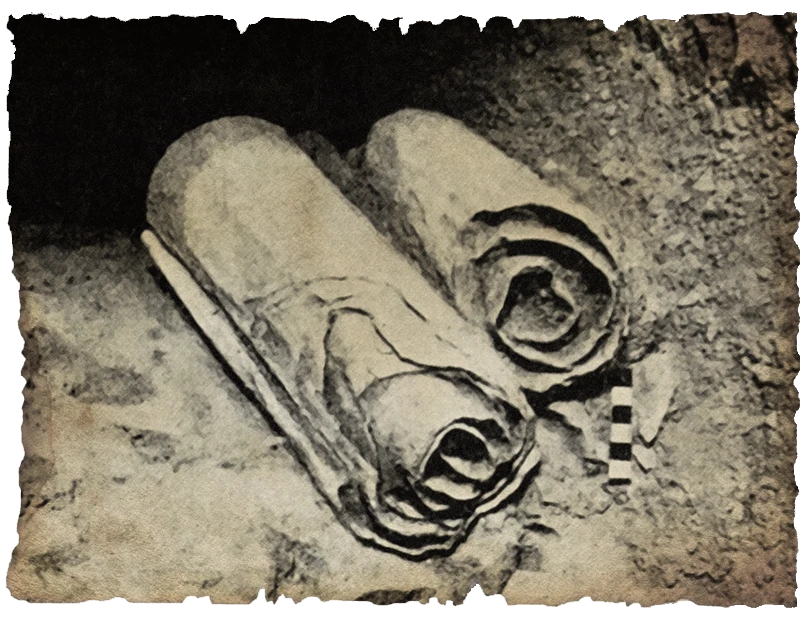
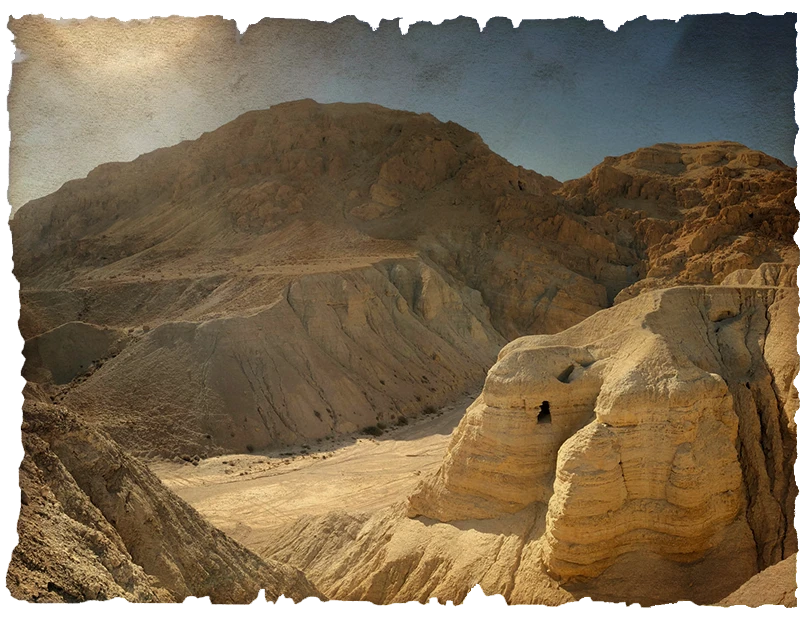
In the spring of 1952, a French archaeologist scouring the cliffs near the Dead Sea stumbled upon a hidden cave, its entrance sealed shut since the first century. Tucked away on a stone shelf at the very back of the cavern lay a strange, fragile, and heavily oxidized copper scroll, snapped in half. Was this the lost treasure map promised by the legend inscribed on Madame Durand’s tablets?
An impossible mystery
When scholars sliced open the oxidized Copper Scroll, they didn’t find ancient religious writings; they found a treasure map. Listing sixty distinct, cryptic locations, the artifact promised unimaginable wealth—a fortune hidden long ago for anyone clever enough to solve its clues.
A Timeless Quest
The scholars were utterly confounded. The Copper Scroll’s clues pointed to a labyrinth of ancient ruins, tombs, and forgotten caves, none of which could be found. Had they missed a hidden code, or was this treasure map merely a deceitful riddle? Baffled, rumors began to circulate: Was the scroll an elaborate ruse, designed to lure thieves to death traps—while the real fortune stayed hidden?
beneath the sands
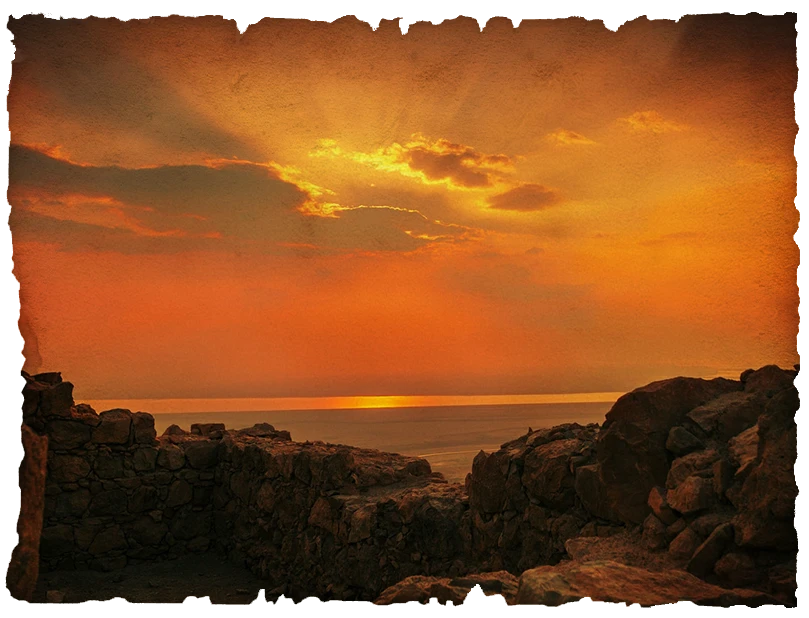
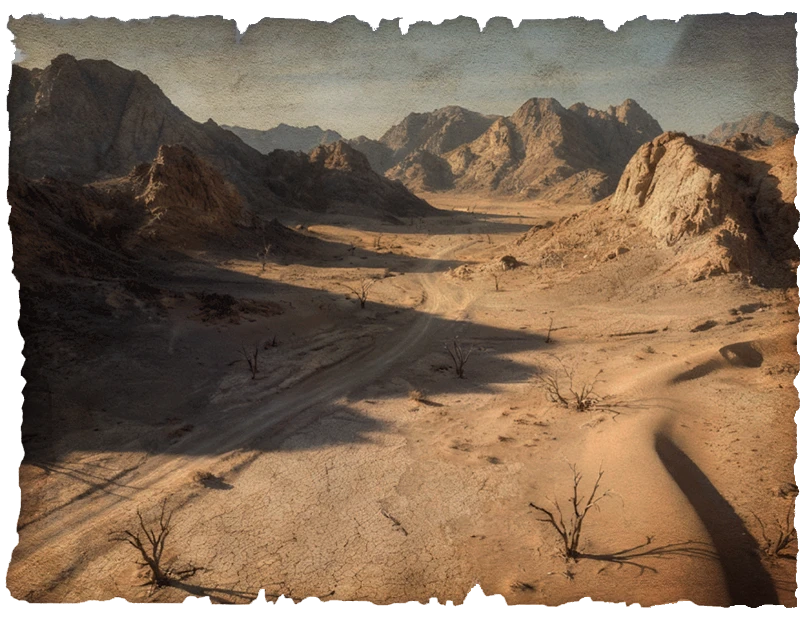
In 1960, John Allegro, the maverick scholar who broke the news of the Copper Scroll’s discovery to an astonished world, traded the academic library for the scorching Judean Desert. Driven by a utopian vision—a belief that the legendary, lost treasures could act as a “bridge to peace” in a fractured land—he began excavating the dark, uncharted tunnels beneath a ruined desert fortress.
not of this earth
Driven from his quest by a savage, unnatural desert storm, John Allegro left behind a cryptic legacy. Now, as modern archaeologists dig beneath the Judean sands, the answers to age-old questions may soon be found: Does the Copper Scroll point to the Lost Ark, and if so, could its discovery bring the peace Allegro dreamed of? Hidden deep within the story of the Lost Ark lies a secret, one that could guide us toward peace—or toward total destruction.

The Newsletter
Join the Adventure
Be the first to know about new discoveries, upcoming books, and special content from Paul Donsbach’s adventure series.